Showing posts with label requiems. Show all posts

Thursday, June 6, 2013

Requiem: Denard Robinson

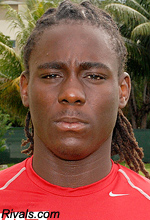
Denard Robinson

 Quarterback, 5'10, 196
Deerfield Beach, FL; Deerfield Beach HS 
Rivals: 4 stars, #14 athlete, #188 overall 
Scout: 4 stars, #16 cornerback, #159 overall 
ESPN: 4 stars, #7 athlete, #101 overall 
Committed to Michigan - February 4, 2009   

I have used the "requiem" tag five times in the history of this blog; a perhaps overly dramatic way of bidding a final farewell to those who depart from the athletic programs we love so much. Five times: Mario Manningham, Chad Henne, Mike Hart, and Brandon Graham for football, and one for Manny Harris and DeShawn Sims, who stuck around to help rescue a basketball program from the wilderness. I keep the "requiem" tag tucked deeply away, and am always hesitant to bring it out; I consider it something close to sacred in my own mind, and I don't want to cheapen it by using it too often. I consider the aforementioned pieces some of the finest writing I've done here, based primarily on the feedback I received from them. Someone once told me (and later showed me in person) that they printed out my Mike Hart requiem and taped it up on the wall in their office. Another person told me my Graham requiem made them cry. It was later brought to my attention that Brandon Graham himself (somehow) found out about it, and wanted to let me know he appreciated my words. So, yeah...I value the "requiem" tag a little bit more than the rest of the blog.

In this case...I feel as if I should have something more. I feel as if I owe Denard Robinson more than the simple tag given to the others. He always had something more for us. But alas, here it is. I mentioned that I use these types of posts as a final goodbye. But how do you say goodbye to someone who has meant so much, for so long? How can you simply move past one of the most important players to ever wear the helmet; someone that united so many when so many were divided? Denard Robinson arrived as a cauldron of fire boiled in Ann Arbor. He was handed the world and asked to guide it out of the fire from which he inherited it. He was asked to be perfect, at an imperfect time, in an imperfect world. He never knew how to be perfect, though; none of us do. But unlike the rest of us, Denard never dwelled on the negatives. To stop smiling would be akin to tying his shoes, or cutting his hair: antithetical to his very essence. Denard doesn't know how to be cynical, or pessimistic. In that sense, he's a better person than the rest of us. Today's line between college and professional football is more blurred than ever. Certain programs are run like cutthroat NFL franchises, buying the best recruits money can buy, processing those who don't cut it, and tossing in any and all incentives in between that can give them an edge. While this went on, Denard Robinson drove an old beaten up car and cherished each day he was in college. It was never about him. Other quarterbacks have come through that tunnel in Michigan Stadium, yearning for the spotlight and never shying away from a camera or microphone. While others sought the spotlight, Denard Robinson purposefully told reporters to leave him alone on September 11, 2010, as the sun faded away into the horizon in South Bend, as Denard, having completed one of the most magical games any of us will ever see, desperately sought out Manti Te'o to congratulate him on a spirited contest between two warriors. A year later, after another surreal slaying of Notre Dame, Denard laughed like a kid live on ESPN when Chris Fowler told him how many yards he had accumulated. It wasn't the laugh of someone yearning for accolades and acceptance. It was the laugh of someone too light-hearted and innocent to realize the magnitude of what he had done; too embarrassed to have the attention on him for even a second. In that sense, he's a better person than the rest of us.

I spend an excessive amount of time on this blog-type thing comparing pedestrian things like football to the bigger picture of life. Sometimes when I look back on things I've written, I scratch my head and wonder where the hell I was going with it. The truth is, I never do "drafts" or "outlines" for anything that appears here. I never plan ahead or schedule things. I wait for the muse to hit me, and then I sit down and type, often at hours when everyone else is sleeping, because I abandoned the thought of being "normal" a long time ago. The peace and quiet that comes with being awake at 4:00 in the morning is mixed in with the haunting stillness of the night. But the combination suits me. I can't say when that process came to be, but that's what it is. So in the middle of the night, I type. Many times I end up erasing the words I type, or abandoning posts I've started altogether. If I were to go through the archives on Blogger, I'd find numerous unposted entries in some degree of completion. Usually it's because I lost interest in whatever I was creating, or my state of mind shifted away in another direction, so what I was writing no longer made sense, or appealed to me. I don't post here for the sake of posting - if I were to do that, I wouldn't go months between posts like I usually do now. I only create something and share it with others here when I feel moved enough to see it through to the end. My day-to-day feelings and moods often provide a significant hinderance to this process; there isn't much that moves the needle for me anymore. Politics are too frustrating to invest too much time in. Sports are always there, but as I've mentioned here before, the perspective of life has dulled my senses to things I used to find both joy and despair in. An optimist would look at that and comment on how that means I'm no longer a wretched, miserable mess whenever a team I cheer for loses, while the pessimist would note that victory no longer brings euphoria to me. The Red Wings just finished playing the Blackhawks in the playoffs. I know in my mind that was supposed to be a big fucking deal. But it just doesn't get my heart pumping like it once did. I slept through Game 2 of that series, that's how little it really mattered to me. So when I take those strolls down memory lane and see how dramatic I made things seem, it puzzles me. As if someone else entirely wrote all that stuff.

But at the same time, I can still see parallels. If football is a metaphor for life, then Denard Robinson is all of us. Every person who grows up in this world eventually has some sort of expectation placed on their shoulders, even if they don't realize it. We all have people in our lives who hold us to a certain standard, and expect us to live up to that ideal, even if we're unsure of the requirements. Whether it's a parent, or a teacher, or a spouse, or a friend, or a child, or a complete stranger, there is always someone overseeing all that we do, paying attention. Often times, we are completely oblivious to the eyes on us. Four years ago, I wonder if Denard Robinson had any idea what was ahead for him. This carefree, happy-go-lucky kid from south Florida who had a rough upbringing decided that his way out was going to be Michigan. Did he give any thought to the bigger picture? Was he even aware of it enough to know the true magnitude of that picture? High school recruits always throw out the size of Michigan Stadium as one of the positives about Michigan - but do they ever pause and consider what that really means? For a few Saturdays each fall, Michigan Stadium holds over 110,000 fans - but how many don't come to the games? How many people are out there, spread across this country, and even this planet, who call themselves "Michigan fans" and tune in to watch the football team each week during the season? Being a football player at the University of Michigan means something more than just putting on the winged helmet. Being a quarterback for Michigan means more than just calling plays and throwing the ball. Being a starting quarterback for Michigan is bigger than just leading a football team for a dozen games a year.

Starting at quarterback for Michigan means you are one of the most recognizable people on campus. It means you have thousands upon thousands upon thousands of eyes watching you every weekend, with an often-irrational level of expectation. But it also means you have to grow up a little quicker than you expected. When you play QB at U-M, you inherit the legacy and prestige of those who came before you, and with that you carry the responsibility of continuing that tradition. Those men, long departed from U-M, were likely foreign to the undersized kid from Florida with the dreadlocks and the bright smile. Denard Robinson never grew up dreaming of following in the footsteps of Brian Griese, or Tom Brady, or John Navarre, or Chad Henne. He just wanted to find a good school that would give him a chance to play quarterback. When he committed to Michigan, most of us figured he'd get a year in at QB, and then move somewhere where he could be more useful, like running back or receiver. Two of the major recruiting sites listed him as an "athlete;" AKA, maybe he could play QB in a pinch, but he'd be more productive at receiver or something. Another site didn't even give him that; Scout listed him as a cornerback. If all things were equal, Denard probably would've gone to Florida - he showed up at his commitment press conference wearing a Gators cap. But Florida didn't see him as a quarterback; Rich Rodriguez did. The man who turned a three-star kid from some small town in southwestern Alabama into one of the deadliest dual-threat quarterbacks in college football history saw something in Denard that he liked.
 

But even then, there was no expectation for Denard. We all knew about his speed, and going into Florida and snagging a speed freak from the Gators excited us, but on Signing Day 2009, the discussion of quarterback was all about the kid from California who had been groomed to be a big-time QB his whole life. Tate Forcier was supposed to be the salvation; the one who guided us from the depths of the 2008 disaster. The future of one of college football's blueblood programs rested on a teenager. And for a moment in time, he appeared ready to handle that weight. Even as we as a fanbase continue to move on from the Rodriguez era (even now rarely does a day go by on The Fort where an RR topic is not brought up), we still go to YouTube to watch what Forcier did to Notre Dame on that sunny day in 2009. Denard barely saw the field that day, and Tate engineered a miracle. There was no doubt to whom the future belonged.

But Forcier wasn't able to cope with the expectations. The weight of the world proved too much for him to hold up. In retrospect, we should've known (and in fairness, many did indeed predict) what would happen. Parents who micromanage and control their children to the point of suffocation only serve to ruin them. Forcier's story is a sad one, because while opposing fans and media chastized him for being too arrogant, too flamboyant, too cocky, what else was he supposed to be? Humility is something that is taught at a young age, but can just as easily be snuffed out. Tate Forcier grew up in a world that told him he was the greatest thing since sliced bread. When you hear that enough, the need to improve in the face of adversity withers away. And as the 2009 season slipped away and Tate gradually broke down, he encountered an adversity that he had never seen, and worse, had never been prepared for. So when that offseason hit, there was no reason, in his mind, to do anything different. He had been handed the job when he got here, so of course it was going to be his no matter what.

For Denard Robinson, the opposite holds true. When you grow up in less than ideal family conditions, in a neighborhood that most of us wouldn't dare enter, and when you're a quarterback under 6'0 without any polish to your game whatsoever, adversity is all you know. People telling you you aren't good enough becomes a rallying point for you in your own mind. Complacency isn't something that ever threatens to permeate your conscience. So while Denard spent most of 2009 on the sideline, only getting occasional plays here and there, and rarely getting to throw a pass, he never doubted himself. If anything, he would look and see Forcier leading the offense, and would be even more motivated to work harder.

At some point between the 2009 finale and the 2010 season opener, two ships passed in the night. One quarterback felt secure in his position, and did nothing. Another yearned for more, and did everything. And in that process, Denard Robinson took the title of "savior" away from Tate Forcier, and never, ever gave it back. If history beckons those who seek it out, then history will remember Denard fondly, because as the storm clouds continued to gather over Schembechler Hall, and as the inferno our beloved football program was in only got hotter, Denard grabbed the bull by the horns.

Michigan fans haven't really had a "normal" season opener in a while; at least in terms of expectations, that is. In that sense, 2007 was the last one, and by the time the 2007 season opener was over, everything we thought was true simply wasn't so. Every opener that's followed has been shrouded in some degree of uncertainty: 2008 brought the dawn of an era we thought would open us up to the future we had rejected for so long; 2009, we were hoping for simplicity in the form of completed passes and a lack of fumbles; 2010 was another new quarterback and more prayers for no more goddamn fumbles; 2011 was another new coach and another "new" offense, and the uncertainty that came with all of that; last year, many Michigan fans clung to the belief that Michigan could actually hang with Alabama.

The 2010 season opener was an unusual festival of expectation, excitement, fear, and the uncertainty of what might happen if things went sour as those ever-present storm clouds still loomed over all of our heads. UConn was viewed as a very sturdy opponent with a defense that was expected to (and ultimately would) lead them toward a possible Big East title and a BCS bowl. Michigan was starting a new quarterback for the fourth time in four seasons, and for the third straight year under Rodriguez. We had seen glimpses of what Denard was capable of as a runner in his freshman season, but his passing wasn't anything anybody had anything good to say about. Forcier was the football equivalent of a pencil that had been ground down to the eraser by the end of the 2009 season, but there was still much trepidation and worry among the fanbase when the offense took the field to start 2010 and it was Denard, not Tate, at quarterback.

Denard's first drive as Michigan's starting quarterback started at his own four yard line, and 96 yards and six minutes later, it ended in the endzone. His second drive ended with him running 32 yards for a touchdown, during which Matt Millen declared "that's six" with Denard still 20 yards from scoring. By the end of the day he had completed 19 of 22 passes for 186 yards and a touchdown, and run for 197 more, leaving most of us wondering what exactly we had just seen. The wide-eyed kid who ran with such exuberance and had no touch or skill behind his passes as a freshman now resembled some sort of ninja.

But Denard couldn't save Rich Rodriguez, because only Rich Rodriguez could save Rich Rodriguez. Doing so would've required a radical and fundamental uprooting of his philosophy - if you've ever met a football coach, you know that change is not something that tolerate kindly. Denard could only do what was asked of him; it wasn't his job to save the defense - that task was placed in the hands of an old man with some sort of stuffed animal on the sidelines. All Denard could do was take the field, regardless of what the defense did previously. He opened our eyes against UConn, and captured our hearts and minds the following week. What Denard did in Notre Dame Stadium that day is something none of us will ever forget; the fact that he somehow managed to eclipse that performance the following year is almost unfathomable. History is written by the winners - nobody remembers Michigan's offense stalling for large, yawning portions of the 2010 game in South Bend; we remember Denard's breathtaking 87-yard touchdown, and the final drive that won the game. Nobody remembers (or just chooses to forget) three quarters of flailing ineptitude in 2011; we just remember perhaps the most electrifying quarter of Michigan football any of us will ever bear witness to.

Even as the 2010 season started to fade, and Rodriguez entered the walking ghost stage of his Michigan tenure, Denard never wavered. Iowa, Penn State and Wisconsin all raced out to huge leads against Michigan; leads that they would not relinquish. But nevertheless, Denard wowed us. Against Penn State in particular, Denard brought the team to a position where a defensive stop meant a chance to tie the game. The defense failing in that task does not diminish what Denard did, even as the brutality of the season took its toll on him physically.

I sometimes wonder what Denard was feeling when the axe finally came down on his head coach in the wake of the atrocity against Mississippi State in the Gator Bowl. Was he angry? Was he distressed? Did he blame himself, or the AD? Did he cry for the man who brought him to Michigan, or did he swallow that despair? I imagine there is always a sense of guilt for players when their coach is fired. It seems it would be a very helpless feeling, knowing that you gave your best, but things ended badly anyway.

Did you know there were only six days between Rich Rodriguez's firing and Brady Hoke's hiring? I looked that up, and did a double take. I guess because it seemed so obvious for so long that Rodriguez was DOA, that the time between firing and hiring felt like weeks. 12 days after Rodriguez was fired, and six days after Hoke was hired, Denard Robinson announced he was staying at Michigan. It would've been easy, and understandable, for him to transfer. He could've gone elsewhere, taken a redshirt, and still played two more years of football. But the same fundamental attitude that allowed him to eclipse Forcier following the 2009 season is the same attitude that did not steer him away from Michigan once the man who brought him here was cast away. "Those who stay will be champions" is a punchline used by Ohio State fans nowadays because Michigan hasn't won a Big Ten championship in nearly a decade; and it is in that two-dimensional line of thought that said OSU fans expose their ignorance, and the mentality that nothing outside the football field matters. In Columbus, no transgression is too egregious; as long as you win on the field, any sin you commit off it is just background noise.

Things are slightly different at Michigan. Being a champion on the field is important, certainly. But that's not the only definition of "champion" that is valued. Chris Webber had more success on the court at Michigan than Denard Robinson had on the football field. One of them has been exiled from the university for over 10 years now; the other is and will always be welcomed with open arms as long as he lives. In a twisted sense of irony, the kind that life always loves to throw in our faces, for all the "Michigan Men" that have coached Michigan over the decades, the one who was decidedly not part of that group was the one who brought Denard Robinson to Michigan, and I can think of no one who better exemplifies what Michigan stands for than Denard. A sub-6'0 quarterback with average passing ability on his best days would never have been recruited by Moeller, Carr, or Hoke today. Only under Bo, during his dalliance with the option, would a QB with Denard's measurables and skillset have been an option (ha!), and even then that was because Bo (and the era as a whole) didn't give much thought to passing the ball. The "prototype" that came to exist at Michigan was cultivated by Harbaugh, Grbac, Collins, Dreisbach, Griese, Brady, Henson, Navarre, and Henne, and will continue going forward under Gardner, Morris, and Speight: tall, big-armed quarterbacks who would very rarely run under any circumstance and would operate almost exclusively under center in a "pro-style" offense. Tossed in the middle of all those names though will be Denard; rarely under center, and often scampering for huge chunks of yardage. In terms of actually passing the ball as a quarterback, Denard would likely rank near or at the bottom of that long list of names. Does that tarnish what he did in his time at Michigan? To some, I suppose it does.

I, on the other hand, contend that Denard's legacy is bigger than the stats. He arrived at the darkest moment in the program's history, went through two years of nonstop controversy, when seemingly each day brought another piece of bad publicity for his coach and his program. At no point did he allow any of this nonsense to affect his play, and that showed. Denard willed the program through the storm, not just on the field during games, but off the field. If Bo's death on the eve of the Ohio State game in 2006 was the beginning of a period of immeasurable suffering for the program, then I say that Denard announcing he was staying after Hoke was hired was the end of that pain. One of the biggest arguments fans used (myself included at times) in defense of Rodriguez was the thought that another coaching change would bring about more transfers and defections and the steep hill we were already trying to get over would become steeper still. We assumed that the mass exodus that occurred in the wake of Rodriguez's hire was the norm during transitions from one coach to another. Brady Hoke not being the volatile bomb thrower that Rodriguez was certainly played a big part in that nightmare not repeating itself; but Denard Robinson was the face of the program in mid-January 2011, and him announcing that he believed in the new head coach enough to stick around despite everyone knowing that they were not a perfect match for each other transcends anything Denard accomplished on the field in a helmet and pads.

In the four games against Ohio State following the 2006 game, Michigan scored 27 points. Total. In each of these games, it felt like any sort of positive yardage on the ground was a major plus, because Michigan was so thoroughly outclassed in the trenches. It felt like any defensive stop shy of 10 yards was significant, because the defense degenerated into such a jumbled puddle of goo that it seemed like Ohio State could and would score on every play. When Chris Wells scored in 2007 to make it 7-3, that game was over, that's how non-existent Michigan's offense was. When Wells scored in 2008 to make it 7-0, that game was over, because that was the worst Michigan team ever and that game was basically over before it started anyway. Michigan showed one tiny glimpse of fight in 2009 when they scored early in the second half to make it 14-10, but Ohio State responded with nine straight runs before scoring on a touchdown pass, and that game was over. In 2010 that game was over before it began because Michigan's coach was a walking ghost and everyone knew it; it was just a matter of how bad Ohio State wanted to make it. The gap between the two programs that began under Carr exploded to Grand Canyon levels under Rodriguez to the point where we genuinely didn't expect anything to go right. Like I said, any miniscule gain of yardage was a success.

The lead-up to the 2011 game was unfamiliar. Ohio State was flailing around through an aborted season because their crime lord had finally bitten the dust after 10 years of cheating, while Michigan was surprising everybody and looking like a pretty decent football team. Two weeks before the Ohio State game, Michigan was 7-2 and headed into Champaign to play an Illinois team with a pretty lofty defensive ranking. U-M had a hitch in their giddyup because of that frustrating 24-16 loss at Iowa the week before. The 7-2 record looked precarious with games against Illinois, Nebraska and OSU still to come. When Michigan responded with shocking, sledgehammer-like brutality against Illinois (31-14) and Nebraska (45-17), we as fans found ourselves in a spot we weren't used to: we expected to beat Ohio State. The offense that stalled out against Michigan State and Iowa found some sort of groove against the Illini and Huskers. At the same time, the scars of the previous years against Ohio State kept us humble, and afraid. When Ohio State's opening drive ended with a 54 yard touchdown and Michigan's opening drive ended with three plays, five yards, and a punt, that same cold knot of dread grew inside all of us. We had seen this goddamned movie before. We knew the ending.

On the second play of Michigan's second drive, the script changed. Denard Robinson pulled the ball out of Fitzgerald Toussaint's stomach, made a one-step juke on Etienne Sabino, found the sideline, and raced 41 yards into the endzone with no one close to touching him, smiling the whole way home. On the next drive, after a safety gave Michigan its first lead against OSU in four years, Denard lobbed a pass some 30 yards down the middle of the field, into what seemed to be a mass of players, both Wolverine and Buckeye. As it turned out, though, the pass had a planned destination after all, as Junior Hemingway appeared to materialize out of nowhere in the endzone, plucking the football out of the air and putting Michigan ahead 16-7.


Denard's performances against Notre Dame in 2010 and 2011 are the ones most often cited as his best, or most electric, or whatever superlative you prefer. His virtuoso performance against OSU in 2011 almost feels overlooked at times, for reasons I can't figure out. Few players have worn the winged helmet and performed better against Ohio State than Denard did in 2011. The years of psychological torture that were laid to rest that day were done so almost entirely by Denard.

If you look through photos of Denard in action in a Michigan uniform (including the one above), he's smiling so much, so often. I can't think of any player who smiles on a football field as much as Denard. Football is a violent, destructive game, with less and less emphasis on the "game" part with each passing year. It's all about glory and power and ultimately money now; you don't really see anybody playing the game for the sheer joy of it. Denard was unique like that. He plays football the way I wish all of us could live life: light-hearted and with a smile, having fun.

One of the few times that I vividly remember Denard not smiling was against Michigan State last year. The win over Ohio State in 2011 left the Spartans as the only blackmark on Denard's resume at Michigan. The outrageous spectacle of the Spartans running their stupid mouths on Twitter during Michigan's loss to Alabama to open last season made it personal - the comedy of MSU players talking trash about someone being whipped by Alabama aside. Mark Dantonio's entire program is built on hypocrisy; for Denard to have gone winless against them during his career would've been a perverse indignity.

I get the sense that Denard felt the same way. Last year's game was one of the more "smashmouth" games I've seen Michigan involved in. Both defenses were A+ on that day (despite being stuck with a D- Big Ten Network crew that honestly made the broadcast dull and listless for such a big game, but I digress). MSU spent three years focusing every ounce of their energy on defense on stopping Denard, and they succeeded three times - the difference last year being that Michigan's defense kept MSU's offense in its rightful fetal position all day, giving Denard one final chance to exact the vengeance he specifically set out for before the season. After he completed the final pass to Dileo and spiked the ball to stop the clock, Denard marched toward the sideline, a scowl on his face, as if ordering Brendan Gibbons onto the field to win the game, as if to say, "I've had it with these motherfuckers. Enough is enough."


As I mention on here far too frequently, they're called storybook endings, not "real life endings." So, naturally, Denard couldn't ride off into the sunset. He would instead be strong-armed to the sideline with a weakened arm. With each game, it seemed like Al Borges grew more and more impatient with the mish-mash hybrid offense he had thrown together to accomodate Denard's skillset. Thus, even as Denard's third year as a starter progressed, his effectiveness and ability to put points on the board seemed to flounder. Even then, the instant he went off the field that night in Lincoln last year, we all witnessed just how precious and valuable he was. That was a very winnable game that lost all possibility of victory when Denard's elbow hit the turf in the wrong spot. Michigan lost the Legends Division to Nebraska by one game.

Denard was never perfect. He was an imperfect passer in an imperfect offense on an imperfect team at an imperfect point in history. He was recruited for one thing and ended his career doing another. The coach who recruited him at the start was fired; the coach who had him at the end wouldn't want him under regular circumstances. He had moments of strangled ineptitude mixed in with moments of sheer brilliance; the inconsolable sadness on his face after the Iowa loss in 2009, and the visceral, primal screaming of euphoria as he raced onto the field after the Sugar Bowl against Virginia Tech. What he inherited was a once-great civilization that was unraveling and depended on him and him alone to hold it together; what he leaves behind is a civilization on its way toward being great again, and has evolved to the point where he was no longer the savior, but just along for the ride. The lunacy of 67-65 triple overtime wins and last minute 42-35 wins has been replaced with boring, uneventful 45-0 and 44-13 slaughters, and in that transition, the base need for Denard Robinson to be all things at all times faded away.

Denard Robinson's college career represented everything about the everyday lives we lead: fleeting moments of both despair and delirium sprinkled amongst the everyday dramas and burdens, while always trying to move forward and make the best of what we have. An equal part tragedy and triumph, we close the book on Denard's career with the memories of Notre Dame, editions 2010 and 2011, Ohio State 2011, and Michigan State 2012, and a BCS bowl win. We remember 200 yards of offense against Bowling Green in ten minutes, and two long touchdown runs that turned out to be crucial against Air Force, and taking Illinois and Purdue and bludgeoning them back into their proper places after the horrors of 2008 and 2009. We remember him bowing in prayer and giving thanks each time he scored; ironic, because it was us who gave thanks to him even more.

The future that lies ahead for the football team we all hold dear is a bright and prosperous one. But while we anticipate it and eagerly wait to see what the five-star running back from Virginia or the five-star cornerback from New Jersey can do, let us never forget the one who set the stage for this bright new frontier; the one who bridged the gap between the darkness of yesterday and the dawn of tomorrow.

There's a little Denard Robinson inside all of us, I think. People like to talk about little angels and devils sitting on shoulders. Maybe there's a little Denard there too; that voice that encourages improvisation and creativity, and making the most of a situation, no matter how grim; a voice that tells us to smile, and to enjoy what we have, in the time we have it; a voice that doesn't take no for an answer. The next time life throws a 300 pound lineman at you, the Denard in you will help evade it. And when it clings to your ankles, desperate to drag you down in defeat, your inner Denard will give you the strength to press forward and complete the pass anyway. And when you find yourself rapidly running out of space, and your obstacles and burdens bear down on you, the Denard inside you will give you just enough to escape and move forward.

You may not reach the endzone. But you will be closer to your goal. You may drop the ball, but you'll be able to pick it up. Your best laid plans may go awry, but you'll always have a contingency.

That was Denard Robinson. Never perfect, often smiling, always humble. He helped us remember how to fly, even at our darkest moments when we thought we had forgotten forever. And for that, he will be remembered to Michigan fans for what he is.

A hero.

Wednesday, June 9, 2010

Requiem: Brandon Graham

Brandon Graham

Defensive End, 6'1, 268
Detroit, Michigan; Crockett Vocational Tech
Rivals: 5 stars, #2 inside linebacker, #15 overall
Scout: 5 stars, #3 linebacker, #14 overall
Committed to Michigan - February 20, 2005

Explosions In The Sky - The Birth And Death Of The Day .mp3
Found at bee mp3 search engine

It would have been really easy for Brandon Graham to have given up.

When Rich Rodriguez arrived in December of 2007, Brandon Graham had just concluded a sophomore season that featured several ebbs and flows. He started out hot - well, after being conspicuously absent from the Appalachian State and Oregon debacles. He finally "arrived" in the starting lineup for good for the Notre Dame game, whereupon he poured in 3.5 sacks in the bloodletting of Jimmy Clausen. From there, he accumulated 3.5 more over the next three games, putting him at seven sacks in essentially four games. He hit a wall after that, as his season total finished at just 8.5. Worse, he became a target for opposing offenses. If you go back and watch the 2007 Michigan State game, you will see that MSU gradually ground Michigan into the dirt with a power running game - a power running game that prominently featured runs directly at Graham, who failed to hold up under the assault. Still, we had seen enough flashes, and we knew what type of ability #55 had. When Rich Rodriguez stepped in, uncertainty was cast over the entire team, but especially the defense.

Graham could've taken the easy way out. As the calm, grisled resolve of Lloyd Carr was replaced by the boisterous hellfire and brimstone approach of Rich Rodriguez, Graham could've easily walked off the practice field, declaring his Michigan career to be over. He could've cleaned out his locker, snagged his transfer papers, selected any college of his choosing, sat out a year, and spent these last two years dominating while also relishing the results of victory. Nobody would've been surprised or especially vindictive if Graham had left. Instead, he chose to remain. As many around him chose to exit under the most bitter of circumstances, and as many who remained still refused to adjust accordingly, Graham said nothing. Graham put the work in. Graham did his job.

And in the process, he defied human nature. And won our hearts.

Deep down, beneath the superficialities and the social rules and norms that we have become hardwired to abide by, human beings are selfish. We don't adapt to change well, our biases and judgments rule our train of thought, and above all else, at the end of the day, we look out for number one. We are interested in advancing ourselves to the highest level we can obtain for the smallest amount of work. The majority of society regards "bums" and "moochers" with severe derision; most of the time for good reason. But make no mistake, even the people who tirelessly hold up our community with the hours of labor they put in would gladly desert their duties in exchange for ungodly sums of money. There isn't a human alive who wouldn't sit at home and do nothing if it meant riches and fortune would cross his path. Thankfully, this isn't how the world works. But the rule itself still applies. We are, at our very core, interested in the easy way out.

By choosing to buy into the vision Rich Rodriguez sold, and is still selling, Brandon Graham snubbed his nose at the easy way out. It became very clear early on that this would be messy. The whispers were there from observers of practice before the 2008 season, but they were only whispers. Once the season itself began, it became obvious to most, and by the time Illinois was done dry-humping Michigan up and down the Big House's field, we all knew we were in for a long, drawn out process. Even then, Brandon Graham could've mailed it in. He could've decided there was no point putting in the effort for a process that would not be finished by the time his career here was. He could've decided none of the pain and anguish was worth it when the end result was yet another defeat. That's another element of the human condition: reaction to adversity. How you face a challenge in front of you, how you react when things don't go the way you planned. How you respond when it seems like there's no reason for being. You can rattle off all the cliches that are out there. Adversity doesn't build character, it reveals it. It's not how many times you fall down, it's how many times you get up. They all fit. And they're all true. The majority of people, I imagine, when finding themselves in a situation that requires an inhuman amount of effort, pain and preparation but also is predestined to deliver nothing but pain, would run screaming. They would get out of such a situation faster than they thought possible.

Brandon Graham once again defied the very nature of humanity. Not only did he remain at his post, even as chaos reigned supreme and the firestorm grew around him, but he bought into what he had signed up for, even though it actually wasn't what he signed up for. Even among those who remained with him over the past two years, there remained some who did it simply because they had nowhere else to go, and their love for the game superceded everything else. For Graham, it was bigger than that. It was bigger than simply loving the game he plays. It was about loyalty to a man who seemingly has fewer followers every time he wakes up in the morning. It was about love for a football program that was bigger than him, and is bigger than all of us. It was about leaving an indelible mark in that program's history, one that will not be forgotten by time nor the followers who recall the tales of the ghosts of the past.

And he has succeeded at all of the above. The vision Rich Rodriguez has for the future of Michigan football - Brandon Graham bought into it and believes in it. The vision Mike Barwis has for the strength and conditioning of the young men who put in the work in that weight room - Brandon Graham believes in it, and has sacrificed to prove it. The football program that Brandon Graham grew up loving and dreamed of being a part of - he became a part of it, even as it transformed and was exposed to the evils of the real world as the shell of isolation was shed from around Schembechler Hall. The mark Brandon Graham sought to leave in Michigan football history - he left it, and it's one that none of us, young and old, will ever forget. This summer, somewhere in the world, a grandfather will sit down in his favorite rocking chair, call over his young grandson, and he will teach the lad the ways of Michigan football. He will tell him the story of Bo Schembechler taking over a stale football program and pulling off one of the greatest upsets of all-time. He will tell him about three yards and a cloud of dust, the Ten Year War, and numerous upsetting New Years in sunny southern California. He will tell him about the tradition of the #1, and how it started before many of us were alive. He will tell his grandson of Desmond Howard's magic, the Catch, and the Pose. He will speak of the majesty of the Rose Bowl, and how Tyrone Wheatley once owned it. He will speak of Mercury Hayes. He will speak of the day Shawn Springs slipped. He will slowly pronounce "Tshimanga Biakabutuka", and explain why that name is so important. He will tell the tale of a team that came out of nowhere to capture a national title. He will talk about Brady, and Thomas, and Terrell, and Walker. He will grow sour and speak of the audacity that was Clockgate in 2001. He will mention the perseverence of those like Daydrion Taylor and Zia Combs, who gave more than what was asked of them in the name of Michigan Football. He will talk about where he was when we lost the man who meant the world to us, and the heartbreak that has never ended since that fateful November 2006 day. He will tell the story of Lloyd Carr refusing to give up even when his final season began with a dud. He will talk of how Henne and Hart dragged their broken bodies across the finish line and gave us all a day to remember with glory on New Years 2008.

And then the elderly grandfather will pause. His trembling hand will remove his bifocals slowly, and he will dab away the mist that has formed in his eyes. His young grandson will ask what troubles him, and he will say, "Nothing, my boy. Nothing at all." And then he will talk about one of the greatest warriors any of us have ever had the pleasure of watching play for the team we all love more than anything else. He'll tell the tale of the 2008 Wisconsin game, and how while it served as an ominous foreshadowing of what was to come, it also reminded us of why we watch, and why we never give up, and how Graham had three sacks in the game which aided the comeback. He'll talk about how Brandon Graham declared "We won't lose to State", and that while his declaration ultimately came up false, it was no part because of him. Then, as he begins to talk about the 2009 season, he will sniffle and cough a bit, and he will muse about the story of redemption that came apart as it progressed, but also how Graham never wavered, how his determination and drive never relented for one snap. The old man will talk about how Graham desperately tried to salvage a bowl bid with four sacks in the final two weeks, including one glorious sequence where he almost single handedly killed an Ohio State drive - but of course, despite nothing short of 100% effort from Graham, those around him failed, and the drive ended in a touchdown, the game ended in a loss, and the career just...ended.

And he'll have made to sure to make special mention of this:


And as the old man's story about the 2009 football season ends, he will segway into a story about commitment, belief, and sacrifice, and how sometimes, even though it may not be ideal, pleasant, or desirable, sometimes you have to sacrifice yourself for something you believe in. Which is exactly what Brandon Graham did. You never heard a peep out of him. All the transfers, all the quitters, all the people showing their true colors by crying to the media, all the losses, all the humiliation that we've endured over the past two years - absolutely none of it is because of Brandon Graham, and the work ethic he showed, the humility he displayed, and ultimately, the martyrdom he exhibited as his career at Michigan faded away into our minds' eyes.

I guess in that sense, Brandon Graham is responsible for a large portion of the heartache we've experienced. Heartache because in a just world, men who lay it all on the line for that which they believe in and love so dearly are rewarded as such. We've seen such sacrifice here recently, in Manny Harris and DeShawn Sims. They weren't in an ideal situation, and they put in the work and effort anyway. But even they were rewarded for their sweat. They got to taste the NCAA Tournament. For Brandon Graham, there was no such light at the end of the tunnel, no bowl game to go out with a bang on, no redeeming victories over Michigan State or Ohio State in the final two years in which he sacrificed like no other.

If I ever met Brandon Graham, I'd like to give him a hug and a pat on the back. I'd like to reminisce about his destruction of Glenn Winston. I'd like to have a laugh with him and ask him to describe how it felt to score a TD his senior year. And then, after the laughter had faded, and the generic conversation had ceased, I'd like to shake his hand, look him in the eye, and thank him. Thank him for the sacrifice he made. Thank him for never giving up. Thank him for representing everything good about Michigan, and the good side of humanity. Thank him for believing in his coach when so many don't.

And then I'd lower my eyes, and just like with Manny and DeShawn, I would apologize. It would be awkward, it would be hard, and Graham would probably say it's unnecessary. But I would do it anyway, because I would feel obligated to. I would say that it's a fucked up world where someone can do everything right and still end up on the wrong side of things. I imagine he would smile - he always does - and say he's okay and he wouldn't change a thing. It would be reassuring, I suppose.

He'll never read this, but on behalf of all those who support the Maize and Blue, thank you, Brandon Graham. Thank you for being the light in the darkness. Thank you for being the rock we could all cling to in the storm. Thank you for being strong, even if those around you were not.

Thank you for smiling, even if there was no reason to smile.

One day, I will tell the story of Brandon Graham to my children and grandchildren, and I will feel remorse. Not just because of the underlying tone that is the cruel unfairness of the universe. But because they will have not seen greatness as it happened.

#55, 268 pounds of twisted blue steel. Farewell.

Monday, March 29, 2010

Requiem: The Detroit Duo

DeShawn Sims

Small Forward/Power Forward, 6'7, 222
Detroit, Michigan; Pershing High School
Rivals: 4 stars, #6 PF, #31 overall
Scout: 4 stars, #9 SF, #44 overall
Committed to Michigan - August 12, 2005

Corperryale "Manny" Harris

Shooting Guard, 6'4, 170
Detroit, Michigan; Redford High School
Rivals: 4 stars, #6 SG, #34 overall
Scout: 4 stars, #12 SG, #57 overall
Committed to Michigan - July 10, 2006

It was clear after the 2008/2009 season that, eventually, an ode to Manny Harris and DeShawn Sims would be necessary. Just like Mike Hart, Chad Henne, and Mario Manningham in football, the Detroit Duo left a mark on the program that is worth remembering, recollecting, and recapping.

Unfortunately, as per the usual in our wretched M existences now, what appeared to be headed for a storybook ending ended like that stupid Nicolas Cage movie. Which one? I don't know, there are a lot of them like that. But what looked like a story of redemption in the wake of backdoor cuts against UCLA and drives through the lane for dunks against Duke ended with putrid, ghastly, abortions in 2009/2010, and the image of Evan Turner strutting off the court in Indianapolis as Thad Matta screamed and flailed like a chipmunk on uppers.

Neither Manny Harris nor DeShawn Sims signed on for what they got. Both committed to play for Tommy Amaker, and ended up with John Beilein. But unlike those with prophets for parents and those who didn't "fit", Manny and DeShawn stuck around and took us for a two-year roller coaster ride. Erratic at times, dominant at others, they were the closest Michigan's had to "elite" basketball players in some time. And for flashes over the past two seasons, they showed things that Daniel Horton and Dion Harris and Courtney Sims never could - the ability to excel under pressure. My lasting image of Harris and Sims is one of a complete breakdown in basketball fundamentals at the end of the 2007 regular season against the Greg Oden/Mike Conley Buckeyes - a game Michigan had no business being in, but was in nonetheless, until they displayed all the characteristics that made the Amaker era infuriating. Missed free throws, blown dunks and layups, and a 10-0 run in the final minutes by Ohio State to beat Michigan 65-61.

It would've been easy for DeShawn and/or Manny to hit the road once John Beilein arrived. As Michigan fans, we've gotten used to hearing the whole "Oh, he doesn't fit the system" thing in both basketball and football. But I think it's a testament to both Beilein and Sims and Harris that they both stuck around and did their best to make it work. In the end, Beilein's a basketball coach, and Sims and Harris are good basketball players. It's not cut and dry like football. But I don't want this to be one of those posts. I probably made a mistake by mentioning football anyway. This isn't what this is for. This is for fondly remembering #3 and #34.

DeShawn, the mild-mannered, always-humble one who never seemed to fit into either the small forward or power forward position. Sometimes he was unstoppable, especially when his jump shot was falling. Often times, he was our only real threat on offense, and most times that was a burden that was too much to bear. When asked to set up shop in the paint, he was hit or miss. He was never a dominant finisher at the rim, often missing simple layins, rarely finishing with an emphatic dunk. We remember his dominance in the 2009 Big Ten Tournament against Iowa, which finally sent Michigan back to the NCAA Tournament. We remember this year's MSU game, where he was inches away from being a hero, despite being so obviously fouled. What's the lasting image of DeShawn Sims in a Michigan uniform?

Here's mine:


One of basketball's most fundamental plays, the backdoor cut, capitalized by a slam dunk and a player wearing a Michigan uniform running upcourt clapping his hands above his head in the world's most famous venue for basketball. That's DeShawn Sims. When I think of DeShawn, I think of the backdoor cut against UCLA that returned Michigan to some sort of relevance.

And then...Manny. I'm probably not the only one who gets a Mario Manningham vibe when thinking about Manny Harris's three years at UofM. Supremely talented, memorable moments...and yet a feeling that if his head had been on a little straighter, things could've been so much better. We all know the flaws in Manny's game - his jumpshot is sort of messy, he can be careless with the ball, he's too small to play small forward in the NBA, etc. We saw Manny's potential during his freshman year, which was for the most part a black hole of death. He showed flashes of what he was capable of, as Michigan lost 20 games. His sophomore year, he led us through the promised land, finishing off Duke at Crisler when he knifed through the lane and flushed the ball through the rim. We remember how he delivered Michigan's first NCAA Tournament win in over a decade with his and-one against Clemson. But for all the highs, it's hard to overlook the controversies. Being benched for overtime against Iowa his sophomore year. Being suspended this past year for the Purdue game. And now he leaves. It's pretty much unanimous that his NBA prospects aren't good, and the fact that he's hiring an agent (and closing the door on any possible return) makes it pretty clear that he butted heads with Beilein on multiple occasions. I was happy to see that Beilein was there with him at the press conference today. I hope it wasn't just for show, because if there's one thing Michigan basketball needs (aside from on the court stuff), it's former players embracing the program. We need Manny Harris to mean what he said today, about how his relationship with Coach Beilein is good and he will always support Michigan. This isn't just about Trey Zeigler, but it starts with him and expands. To land great recruits like that, Michigan basketball needs stars like Manny Harris to say, "Michigan is a great place."

I'm so tired of this, really. I truly am. I'm sick of writing these types of posts, bidding farewell to those who gave so much and got so little in return. Jesus, just wait until the Brandon Graham requiem post. Manny Harris and DeShawn Sims took a chance on Michigan. They could've picked pretty much any basketball program in America, and they took a chance on Tommy Amaker, and an even bigger one on John Beilein. They'll tell you they don't regret anything they've done. They had productive careers, led Michigan to a place it was 11 years removed from, and will get their shot at proving themselves at the next level. But as we face the specter of a 2010/2011 Michigan team, sans Manny, sans DeShawn...it's not a pretty picture.

I'm tired of scenes like this...


...where even our best isn't good enough anymore.

I long for the day where I can say farewell to a Michigan player and thank him for the beatings he put on those we detest the most, instead of only thanking him for the hard work he put in and awkwardly apologizing for how it didn't work out the way it should have or could have.

Goodbye, Manny and DeShawn. Thank you for taking a chance on Michigan. If the day should come where Michigan is great again, I hope to see the two of you back at Crisler to celebrate.

Tuesday, July 8, 2008

Requiem: Mike Hart.

Mike Hart
Running Back, 5'10, 175
Rivals: 3 stars, #6 all-purpose back
Scout: 3 stars, #18 running back
Committed to Michigan - July 8th, 2003

The closest I've come to meeting a Michigan football player was at the 2004 Northwestern game. Before the stadium was full, I was down near the field watching the players warm up. I caught a glimpse of the receivers, so I shuffled over so I could get within shouting distance. Once there, I shouted, "YOU'RE THE MAN, BRAYLON!", and I got a half head turn and a slight raise of a finger to the sky in acknowledgment. I was happy. Looking back four years, I only have one regret about the exchange.

It wasn't with Mike Hart.

There's a little Mike Hart in all of us. We're all told we can't do things, that certain things are unattainable for common folk like us. And it's the Mike Hart in us that challenges our souls. It dares us to prove everyone wrong. Most people call this human nature, the urge to do what others deem undoable. I call this trait "Mike Hart." When I think of things I've been told I cannot do, I think, if Mike Hart can become only the 4th player in Big Ten history to rush for 5000 yards, how can I think that such trivial tasks are impossible?

Normally, 5'10, 175-pound running backs run 4.3 40s and are thought of as scatbacks capable of scoring 80 yard touchdowns. Not Mike Hart. Nobody will ever mistake Mike Hart for Noel Devine. Most coaches and fans wouldn't tolerate a diminutive back that would always get caught from behind.

Go around and ask any Michigan fan, if Mike Hart needed a kidney, would they give it to him?

People would be fighting to get to the front of the line.

Why? Because no player in recent history has ever epitomized Michigan more than Mike Hart. After David Underwood's injury early in 2004, a pint-sized guy named Hart got his shot at running back against San Diego State. The result: 25 carries, 121 yards. Not eye popping. Nothing that would get the lead story on SportsCenter. Just...workman-like. Just...Michigan.

From there, 99 yards against Iowa. 79 yards at Indiana. And after that, #20 gave us a glimpse of what the next four years would be like. 160 yards against Minnesota. 234 at Illinois. 206 at Purdue. 224 against Michigan State. 151 in that game against Northwestern. Ohio State and Texas slowed him down, but Michigan fans were entranced. 1455 yards and 9 touchdowns for a freshman running back without blazing speed.

In Michigan circles, 2005 is known as the Year of Infinite Pain. Even with recent humiliations, like Ohio State owning us or Appalachian State, Michigan fans will still cringe when asked to discuss 2005. And as much as it hurts us, as much as it haunts us, I think it ate away at Mike Hart more than any of us. Could there be any fate more cruel than missing the vast majority of seven games while your teammates endured the worst season in 20 years? Hart missed all of the Eastern Michigan, Wisconsin, Northwestern and Indiana games. He left after three carries against Notre Dame, reaggravated his injury after five carries against Iowa, and was limited by both injury and smothering defense against Ohio State.

What a despicable black mark on the football gods, robbing Mike Hart of any substantial play against Ohio State in either of the home games against them in his career. 27 carries, 59 yards in two home games against OSU, both marred by injury, both marred by poor line play, both ruined by defeat. I toss and turn sometimes at night, thinking that there can't be any justice in this world when someone like Hart goes 0-for-Ohio State.

We remember Hart as a hero. We remember him as the leader of the resurgence in 2006, the face of the pack of men determined to regain their pride. When the blowout in South Bend ended and Henne took a knee and was done holding the football up to present to the Irish faithful as a symbol of their destruction, there was Hart, bounding off the sidelines and leaping into the arms of his quarterback. Finally.
It didn't stop there. Hart and the defense carried the burden of 2005 with them all through 2006, and it showed on the field. As if he hadn't done enough, Hart won us with his vision. Like a seer, he saw the holes in the zone blocking scheme, and he always made the first man miss, often times the second, too.

We all know things ended badly. We all know Michigan lost the 1 v. 2 game in Columbus. I have not watched any part of that game since it was played, and I never will, but I believe one thing. With his performance on the field that day, a day after Bo died, Bo's spirit lived on inside of Mike Hart. For nearly 40 years, Bo was Michigan football. If it is at all possible for that spirit to be passed to a player, Mike Hart is that player. There was never anything more Michigan than the moment when Hart planted the Ohio State defender on his ass as he charged into the endzone.

After the game ended and Ohio State had 42 points to our 39, we raged. We swore. We cried. We swallowed another bitter pill of resentment. I'm sure Mike did all those things too, except he got a microphone put in front of him, and he swore up and down that if given another chance, Michigan would beat the Buckeyes. He wasn't grandstanding. He wasn't appealing to voters to give them another shot. He was doing what he does best - he was speaking from his soul, saying what he believed to be true.

Hart never got that second chance. His final shot at Ohio State was doomed from the start. Would things have been different if Henne was remotely healthy? Would they have been different if the weather was better? Would Michigan have had a chance in that case, even with the offensive line getting destroyed? I like to think so, only because it helps me sleep at night.

I remember watching video of Mike at Big Ten media day before the 2007 season. His air of superiority was there, like it had always been in some form or another. The media wasn't asking questions about him being pegged as Preseason Player of the Year. They were asking about Jim Harbaugh, whom Hart had thrown under the bus for comments made about Michigan allegedly steering its athletes toward easier classes. When Lloyd was asked about Harbaugh's comments, he had to be diplomatic; he couldn't come out and call Harbaugh an asshole. I could tell he wanted to, but he couldn't. Mike didn't have such restrictions on him. So he let it fly, to the effect of stripping Harbaugh of his "Michigan Man" status and claiming to be embarrassed to be from the same school as Harbaugh.

That bravado, that spirit...two weeks into the season, you would think it would've been zapped. The fiasco that was Appalachian State and the debacle that was Oregon could've broken the spirit of a man. What did Mike Hart do? He declared that he wouldn't want to be on any other team in the nation than the one he was on, and he guaranteed a win over Notre Dame. And then he went out there and backed it up.
2007 was unfair, on so many levels. It wasn't supposed to go the way it did. The unspeakable disaster that started the season was bad enough. And then, with only so much left to be salvaged from a season gone terribly, terribly wrong, Mike's Heisman chances had to be ended by an unfortunate ankle sprain against Purdue. Through that point, the first seven games, Hart had run for 188, 127, 187, 153, 106, 215, and 102 yards, with 12 touchdowns. Outside of 18 ineffective carries against Ohio State, Hart's regular season was over after the Purdue game - except for the game in East Lansing.

I'm not sure Mark Dantonio knew what he was getting himself into. The popular thing on the internet is for anonymous idiots to dismiss "bulletin board" material as an overrated tactic. ORLY? Tell that to Bill Belichick. He's won three Super Bowls using the other team's signals motivating his players by telling them everyone thinks they aren't good enough. Bulletin board material is a tangible factor, and Dantonio's childish comment about sarcastically asking for a "moment of silence" after Michigan's loss to Appalachian State did not go unnoticed in Ann Arbor. It's no coincidence that Sparty hasn't beaten Michigan since stealing the 2001 game; Lloyd never forgot. And it's no coincidence that the MSU game was the one game Mike and Chad played through; they never forgot what Dantonio said. Even then, Mike's ankle was too mangled to go the whole way, and he had to spend most of the second half on the sideline, his final play being his heroic recovery of Mallett's fumble. And after the game, Hart decided to put Dantonio in his place, saying what no Michigan player or coach had ever had the balls to say, but every fan had wanted to: MSU, you are Michigan's little brother. Now sit in the corner.

Like everyone else, Mike went out with a bang in the Capital One Bowl against Florida to the tune of 129 yards and two touchdowns. Of course, it could've been four touchdowns. Seriously, was there any doubt that the football gods have some kind of grudge against Michigan when Hart fumbled twice? He fumbles in the fourth game of his freshman year, doesn't lose another for his entire career until he loses TWO inside the five yard line in his final game? There is no god!

But all's well that ends well, or so they say. And when it was over, there was a victory, and Mike helped lead Jake in the most emotional singing of The Victors this side of 1997.

Pete Townshend once wrote and Roger Daltrey once sang that no one knows what it's like to be the sad man. That's not true. When I think about Mike Hart, and I'm sure I'm not the only one, I get sad. Sad that in two trips to the Rose Bowl, Mike didn't win. Sad that in four games against Ohio State, Hart left the field each time on the losing end. Sad that Hart had to deal with the Appalachian State fiasco. Sad that Hart had to watch for much of 2005. Sad that while Michigan football endured body blow after body blow from all angles, Hart was doing what he did best - holding the whole thing up on his shoulders. No one in the history of mankind will ever be more aptly named than Mike Hart. Perhaps it was fate that such a man was delivered to us. Perhaps it was destined to be this way. Perhaps some higher power decided it to be so that a 5'10 (and that's generous) running back that didn't know what the word "quit" meant would become the face of our program for four years, and would win the hearts of every Wolverine fan. Perhaps it was cruelly supposed to happen the way it did, that Hart was supposed to be a tragic hero for the death throes of the Carr era.

I don't know. I just know that I love the guy for what he's done, and now it's over.

So the next time you're up against it, the next time you feel like you're facing a challenge that can't be conquered, I want you to think of Mike Hart. I want you to think of Mike Hart dragging a linebacker, or slipping through the pile for a first down, or rolling over a Purdue defender and suddenly springing to his feet for a touchdown, or leaping over the mass of humanity into Notre Dame Stadium's endzone, or finding a way to not touch the ground while contorting his body into the endzone against Michigan State.

The next time someone says you can't, I want you to think about how Mike Hart could, and did.

Five years to the day of Mike committing to play football for Michigan, I bid him adieu.

Good night, sweet prince. There will never be another like you.

Tuesday, July 1, 2008

Requiem: Chad Henne.

Chad Henne
Quarterback, 6'3, 210
West Lawn, Pennsylvania; Wilson High School
Rivals: 5 stars, #4 QB, #13 overall
Scout: 5 stars, #4 QB, #24 overall
Committed to Michigan - August 7, 2003

How will you remember Chad Henne?

Will you remember him as the blue chip prospect who snubbed Penn State and picked Michigan two days after Dan Connor snubbed Michigan and picked Penn State?

Will you remember him as the quarterback who never beat Ohio State?

Will you remember him for showing no fear despite being thrown right into the fire, starting from the word "go" in his freshman year?

Will you remember him as the holder of the vast majority of the passing records in Michigan history?

Will you remember him as the warrior that fought off injury to save games at Illinois and at Michigan State in a desperate attempt to salvage what was left of the abortion that was his senior season?

Will you remember him as the QB who showed so much skill, so much poise and so much talent one game, but would barely complete 50% of his passes, constantly overthrow his receivers and throw a pick or two the next, and never truly seemed to have that "it" intangible that all great quarterbacks have at some point?

Everyone knew that Matt Gutierrez was only holding the seat for Henne when the latter arrived on campus in 2004. Everyone figured Gutierrez would start for a year, MAYBE two, and then it would be Chad's show. No one expected Gutierrez to go down with a phantom injury before the season opener. Suddenly, with a true freshman at the helm, nobody knew what to expect. Surely expectations had to be lowered.

Well, not so much. It just so happens that Chad had this guy named Braylon playing wideout for him. With a simple heave, the wide-eyed freshman could have the look of a heroic senior. After his first touchdown, he sprinted into the endzone to celebrate with the senior Braylon, who hoisted his new quarterback into the air like it was his first born son.The future was limitless now. It was just like Henne - bright, endless, full of grandeur and championships. And just like Henne, it taunted us like the mirage in the desert, always being out of arm's reach, yet staying within our sights, goading us into a frenzy of frustration and resentment.

Henne lost his first test at Notre Dame, but bounced back beautifully, leading Michigan to a 7-0 record in the Big Ten, including the classic triple overtime win over MSU that saw Henne team up with Braylon to turn a 27-10 fourth quarter deficit into a 45-37 win.

Unfortunately, after the 7-0 start in conference, we were given a glimpse into what our reality is. A clearly inferior Ohio State team welcomed BCS-bound Michigan to Columbus. Buckeye fans themselves didn't really expect their team to win. They were 6-4, 3-4 in the conference. And yet powered by a Ted Ginn touchdown and about 1000 yards from Troy Smith, they crushed Michigan 37-21, leaving us fans shaking our heads. That put Tressel's record vs. Michigan at 3-1, but it was this game that firmly planted Tressel inside the heads of everyone associated with Michigan. Ohio State was not supposed to win that game. They were Alamo Bowl-bound, and Michigan was Rose Bowl-bound. Michigan was supposed to go in there, finish a perfect conference season, and go to Pasadena smiling. And in a 3+ hour span in that abysmal place, Tressel seized complete control of the Michigan-Ohio State rivalry, a hold he has not yet relinquished.

Henne played perhaps his best game in the Rose Bowl that year against Texas. 227 yards passing, four touchdowns, no turnovers. And yet, in what I suppose was perfectly symbolic of his career as a whole, Henne's best wasn't good enough, as Vince Young upstaged him and won the Rose Bowl.

There were still high hopes in 2005. Henne (and a certain running back) were only sophomores. Braylon was gone, but Avant was back. So was Breaston. The loss of Braylon certainly hurt, but there was no reason for Michigan fans to not expect a return trip to the BCS in 2005.

Except for, well, the roof caving in. That aforementioned running back was hobbled in the second game of the season and never truly right, Henne regressed, obviously missing Braylon, and the defense wilted like Charlie Weis in 90 degree weather, blowing fourth quarter leads and giving up game-losing drives to Wisconsin, Minnesota, Ohio State, and Nebraska. Henne, one of the heros of 2004, was one of the scapegoats for the Year of Infinite Pain. Said Year finally cost Jim Herrmann his job as defensive coordinator. It also cost Terry Malone his job as offensive coordinator, and of course Michigan hired Mike DeBord to replace him. It wasn't unreasonable, I guess. It's not like DeBord completely buried a MAC team with surreal levels of suck and only got the gig at Michigan because he was Lloyd Carr's boy or anything.

Oh, wait. Which way does time go?

It's BS like that that actually pisses me off when I rewatch the Capital One Bowl. What spurred that sudden spread look? Was it the simple fact that DeBord (and perhaps Carr?) knew that there was no point in holding anything back since they were both done after the game anyway? Would we have seen that offense during the regular season if Henne had been healthy?

I guess we'll never know. Sigh.

Anyway, back on point. As we all know (and as Sean McDonough reminded us about ten times a game everytime he called a Michigan game in 2006), the entire team used Seven and Five as a rallying point, and unleashed their fury on their opponents. Notre Dame, Wisconsin, Minnesota, three guilty parties in the Year of Infinite Pain, paid for their trespasses, thanks in large part to Henne establishing a connection with Mario Manningham much like the one he had with Braylon in 2004. Seeing Henne lob the ball 30-40 yards through the air and having Mario glide under it in stride perfectly for six was a thing of beauty.
Ironically, it is a near miss on that connection that still sticks with me. During Football Armageddon (the 2006 Ohio State game), I believe it was tied 7-7 in the first quarter when Henne unleashed one of his deep bombs for Mario, who had eluded the Ohio State secondary and was all alone for something like a 70 yard touchdown...except the pass was a hair overthrown. If that pass connects, Michigan retakes the lead, seizes momentum, and who knows what. Instead, OSU goes up 21-7, leads 28-14 at halftime, and Michigan plays catchup until time runs out and they lose. Shit.

The 2006 season ended so horribly. I'm over it, but still, not a day goes by where I don't think about what could've been. The loss to Ohio State was bad enough, but to spend the next 50(ish) days hearing about how Florida deserved the spot in the title game and then completely embarrassing yourselves in the Rose Bowl with your credibility on the line...ugh. I'm tired of the Rose Bowl. It's the holy grail of Big Ten football, and yet what is seemingly ALWAYS waiting for us when we get there? Thorns. USC receivers abusing our secondary. USC blitzers and defensive linemen blowing by our offensive line like they're turnstiles. Michigan coaches not adjusting to the blitzes at all, despite seeing the exact same thing four years earlier with John Navarre. Watching USC throw the ball at one point 26 out of 28 plays in the second half (with the other two being QB sneaks on 4th and 2 & 3rd and 1) because they knew they couldn't run and Michigan couldn't adjust.

My neck hurts from shaking my head too much after typing that last paragraph.

But don't worry, it was all supposed to be amended in 2007. Henne was going to light up the skies with Manningham, Arrington and Mathews, that little running back was going to destroy all defenders who tried to tackle him, and the best offensive lineman in the country was going to protect both of them flawlessly.

Except we forgot who was coaching. And who was calling the plays.

Michigan's season - and Henne's final season - was essentially nullified after the first day. The cancer-causing loss to Appalachian State, while not quite the end of Michigan football as many feared (or hoped), stained the season permanently, and I would wager a guess as to say it shifted the fanbase. I obviously have no data to support this, but I'd guess after that game, and ESPECIALLY after the next game, more than 50% of Michigan fans nationwide saw that Carr's time was done and it was definitely time for a change.

And then to add insult to injury (...or, well, injury to insult), Henne was knocked out of the Oregon debacle, and had to sit the next week; the final Michigan-Notre Dame game of his career, and he had to watch from above as the heir apparent led a 38-0 win.
There are some terrible things in this world...but I can think of few that are worse than seeing your kingdom, your throne, usurped by another.

Henne bided his time. From the box and the cast against Notre Dame, to the sidelines looking like a coach, to the field again. He took over when Mallett faltered at Northwestern; Michigan wins. He returned after being injured at Illinois; Michigan wins. He fought off a hellacious pass rush (thanks to DeBord's predictable offense) and multiple injuries to win the MSU game after being down 10 in the fourth quarter.

But the injuries caught up to him, with an added dose of terrible luck. Henne's shoulder had been separated against Illinois, and wouldn't be 100% until the bowl game. Less than 100% was good enough to beat Illinois and Michigan State, but it still needed treatment - and before the Wisconsin game (a week before Ohio State), the doctors gave him a shot, and ended any chance of Michigan winning either of their last two games. They hit a nerve with the needle, rendering Henne's throwing arm completely useless. He had no feeling, and no feel for where the ball was going when he released it. It showed: five passes, one awful interception, and that was that. Henne was pulled for Mallett, and perhaps rightfully so; the Wisconsin game had no meaning. Regardless of the outcome, Michigan vs. Ohio State would still decide the Big Ten title.

Of course, we all know what happened. Hart was still hurt, Henne was bad, the weather was terrible, and the offensive line was worse. Henne still had almost no feeling in his arm, and that defeated any chance of victory. What a cruel, despicable fate. Coming back for your senior year with the Ohio State monkey on your back, and even after Appalachian State, even after Oregon, the chance to beat the Buckeyes was still there, and was squashed by a botched shot and Vernon Gholston eating Steve Schilling for breakfast, lunch, and dinner. Another senior day gone by, and another loss.

There was some redemption, some dignity left for Chad to save, and he saved it in the bowl game. Quarterbacks are always unfairly blamed for losses and unfairly praised for victories, so the 1-3 bowl record and 0-4 OSU record looks bad. But when the Capital One Bowl ended, and Chad was smiling and hoisting the MVP trophy, millions of Wolverines nationwide smiled with him. Much like Mario, Chad's legacy at Michigan is one of extreme ups and downs; flashes of brilliances and wild inconsistency; the thrill of a freshman leaping around after his first touchdown pass and the agony of a seasoned veteran scraping himself off of the Rose Bowl grass. When it was all said and done, it was refreshing, and heartwarming to see a smile at the end of the tunnel for once. It wasn't a full, shining smile. It wasn't the kind of smile you see after you beat Ohio State or win the Rose Bowl. For Chad, those kind of smiles are the ones we can only see when we daydream of better days. We can fantasize about such a smile from Kevin Newsome, or Shavodrick Beaver, or whoever else is next in line.

But a smile is a smile. It's about time we had something to smile about.